

#Issue 1: Deploying code the old school way with FTP and FileZilla
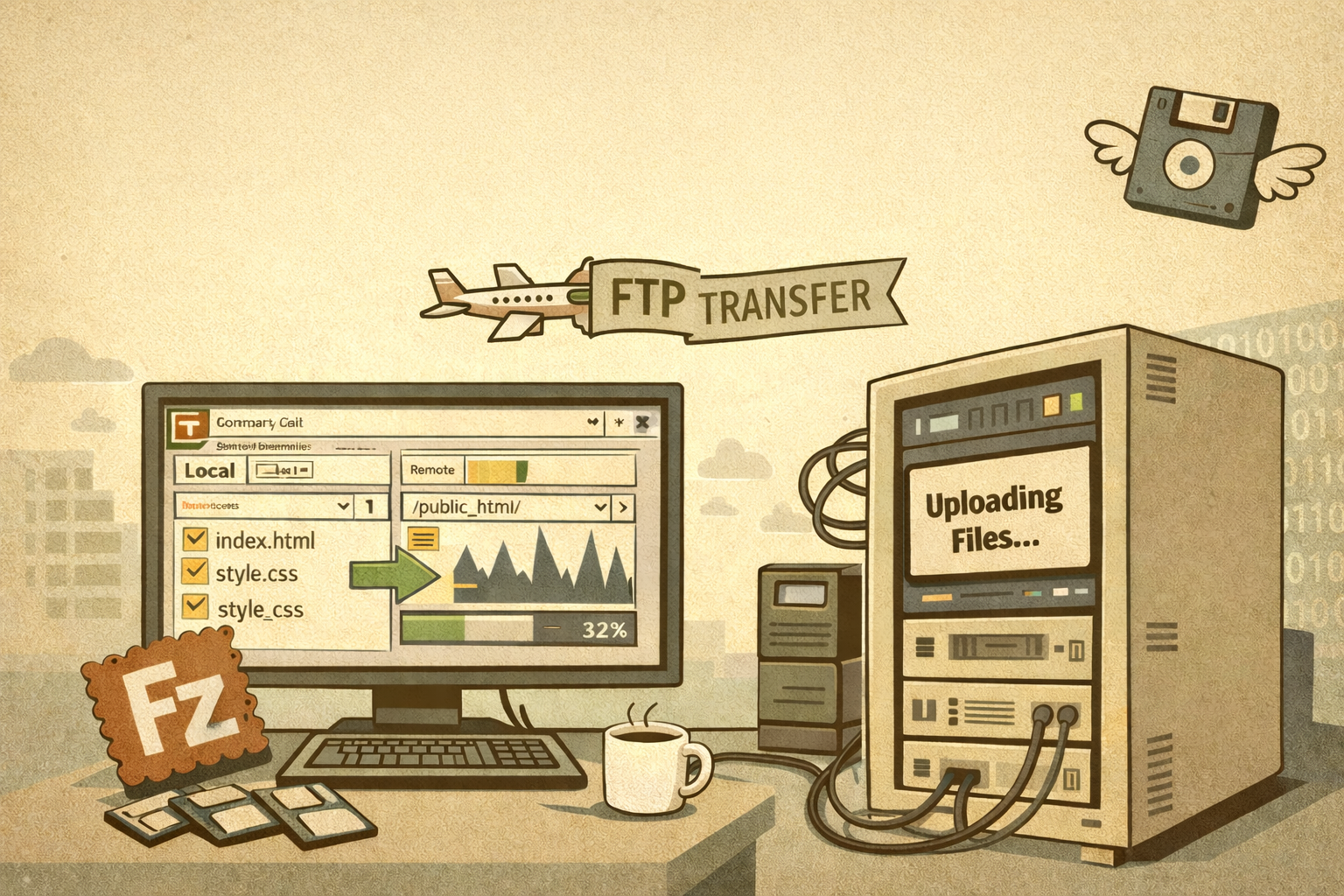
If you were not at least freelancing in the early to mid 2010s, prepare to get your mind blown.
At the time, I was an unpaid intern at a software shop. So the story I am about to tell is based on memory — it may be a tad bit inaccurate, but it is mostly correct, and I verified a few details from the good internet 😁 .
Story time
Before GitHub Actions, before fancy pipelines, there was FileZilla, an FTP server, and a quiet prayer that nothing went sideways 😂. If you never deployed code this way, buckle up. If you did, you already know the feeling.
The ritual
It usually went like this:
- Zip the project (or just the folder you think you changed).
- Open FileZilla and connect with the host, username, and password.
- Drag files over and watch the progress bar crawl.
- Hold your breath while your live site updates in real time.
No blue-green deploys. No rollbacks. Just you, a server, and the hope that you did not overwrite the wrong file, yikes!
The adrenaline
There was always a tiny rush:
- Did I upload to the right folder?
- Why is this file still caching?
- Why is the home page suddenly white?
- Did I just upload
config.phpto production?
It was stressful, but also kind of thrilling. You felt close to the server, like you were doing real engineering magic with your bare hands.
What made it fun (and terrifying)
It was simple, direct, and easy to learn. But it was also risky:
- One wrong drag and you could overwrite a live file.
- No automated tests between your laptop and production.
- Manual steps meant human errors, especially late at night.
If you have never seen a production error caused by a single missing semicolon uploaded over FTP, I envy you.
Final thoughts
It is very possible that someone out there still deploys this way. After all, we still have codebases in COBOL and FORTRAN. The FTP approach might even be better than I remember, but it is definitely not common. If you want a visual walkthrough, this YouTube video helps.
If you are a newer developer, it might sound wild that this was common. But it was, and it worked more often than it didn’t. Boy, those were the days 😂😂😂.
If you have your own FTP war story, I would love to hear it.
Ciao!