

The New Senior Engineer Skill Might Be AI Orchestration
This is not meant to be a deep dive. I just want to keep it short and share something I have been thinking about a lot lately.
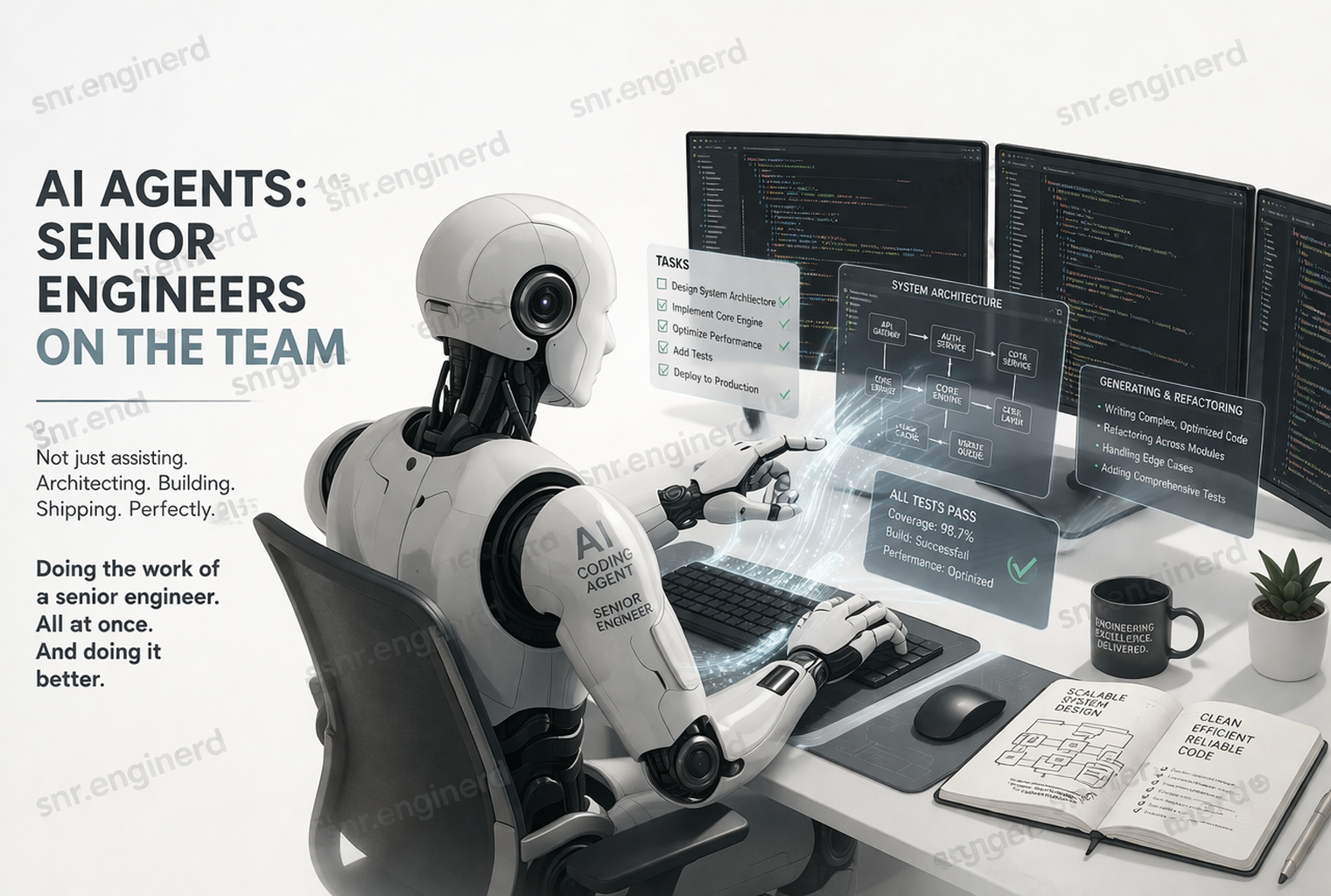
I think part of senior engineering is quietly shifting toward AI orchestration.
At the start, I thought the main skill was prompt engineering. That felt true for a while. Better prompt, better output. Simple enough. But that does not feel like the full story anymore.
These days, using AI well for engineering feels bigger than prompting. There are rules, skills, agents, context files, review flows, MCP servers, and all these small workflow decisions that affect the quality of what comes back.
A lot of us are learning this on the job because there is no one clean tutorial that really teaches the whole thing, atleast in my experience.
Where MCP clicked for me
MCP servers were another thing that confused me at first. I kept seeing people mention them and I did not really get why they mattered.
The simplest way I think about them now is this: they give AI tools a standard way to connect to other systems. So instead of the model only working with whatever is in your prompt, it can also work with tools and context from places like Linear, Sentry and many more.
People even build their own MCP servers for internal tools and custom workflows.
What this changes for senior engineers
That is where it starts to feel more real to me. You are no longer only asking the model to generate text or code. You are giving it access to the systems around the work.
So now the skill is not just "can you prompt well?" It is also "can you connect the right context, ask for the right thing, and still stay in control of the outcome?"
That is part of why this no longer feels like "just prompting" to me. It is starting to look more like workflow orchestration.
At work, I have used Cursor for development and PR reviews. More recently, I have been using Claude Code for development, and I genuinely prefer it. It feels different from Cursor, and being in the terminal changes the experience for me in a good way.
That is part of why I think "learn AI" is too vague to be useful advice for engineers.
What does that even mean?
- Does it mean writing better prompts?
- Does it mean knowing when to trust the output?
- Does it mean knowing how to break work into steps?
- Does it mean knowing when not to delegate something?
- Does it mean reviewing AI-generated code properly?
I think the answer is yes. All of it.
My hot take is that the value of a senior engineer is starting to shift a little.
I am not saying coding no longer matters. It obviously does. I am also not saying AI is replacing engineers tomorrow.
What I am saying is that more of the work now feels like guiding the agent, structuring the context, reviewing the output, and deciding what should or should not be delegated.
That is a different shape of engineering skill.
Where this might be going
I recently came across a job posting for a Senior AI-Augmented Engineer, and one of the requirements mentioned agentic workflow mastery. That phrase stayed with me because it feels like a preview of where things are going.
Not just "can you code?" But "can you work effectively with AI agents and still keep the engineering quality bar high?" That is a different question. And I have a feeling it will become more normal.
The strange part is that there is still no single playbook for this. Everyone is kind of building their own workflow as they go. Some people are doing thoughtful work with rules and structured context. Some are just prompting into the void and hoping for the best, that gap matters.
Because in this era, I think part of your value as an engineer is how well you can orchestrate the work around AI without becoming sloppy.
Maybe that becomes part of what senior engineering means. Maybe it becomes a new title entirely. I do not know.
But I do think this part is real: the engineers who learn how to guide AI well, review it well, and use it without lowering their standards will have an edge.
And if I am being honest, I still feel like I am figuring it out too. That may be the most relatable part of this whole thing.
Conclusion
We are all being told AI is the future, but for a lot of us the actual learning still looks messy. It looks like experimenting, changing tools, rewriting rules, and slowly building a workflow that feels reliable.
That is where I am right now. If you are figuring it out too, you are probably not behind.